
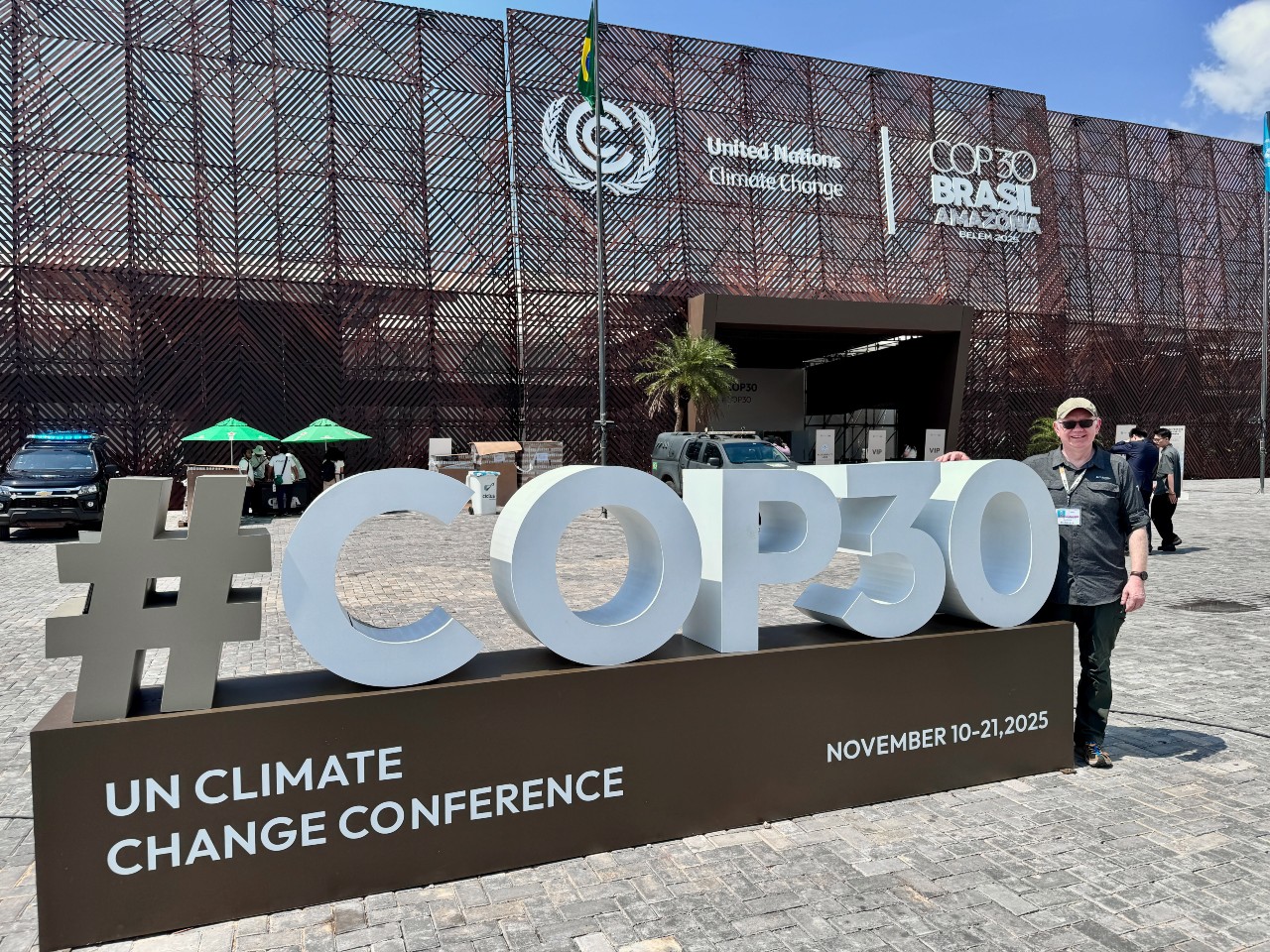
Alan Brouder, a PhD researcher from the School of Geography, recently represented NaHuDi at the COP30 climate conference in Brazil. While COP30 didn’t achieve some of the ambitious goals that many had hoped for on certain issues, like the transition away from fossil fuels, it was clear that the issue of displacement and mobility is continuing to gain traction and build momentum both within and outside the UNFCCC process. The President of Brazil Luiz Inácio Lula da Silva referred to migration and displacement in his opening address, and several recent developments in displacement, mobility, and green skills were highlighted throughout COP30.
For example, of the 22 African countries that have submitted National Adaptation Plans, 18 now include references to human mobility. More than 50 countries (including more than 20 in Africa) now have national laws, policies, and/or strategies on internal displacement. Thirty-four of the 55 member states of the African Union have now ratified the Kampala Convention for the Protection of and Assistance to Internally Displaced Persons in Africa, and the African Union has enshrined migration as a key adaptation strategy in its development roadmap for the continent – Agenda 2063.
At COP30, an agreement was made on a list of indicators to monitor progress on the Global Goal on Adaptation. While there is no standalone thematic area dedicated to human mobility, displacement, or migration in the final 59-indicator set, two of the indicators (Targets 9(a) and 9(e)) make reference to relocation and planned relocation in the context of water-related hazards as well as vulnerable infrastructure and human settlements. Two of the indicators under Target 9(f) focus on the use of adaptive social protection measures and level of social protection systems that consider climate risk management aspects and can respond to climate change impacts. These indicators are an important focus in our recent Research Ireland project MiCASP (Migration, Climate and Social Protection). Negotiations on the indicators were quite contentious and none of the earlier proposed indicators on green skills and the just transition made it into the final list.
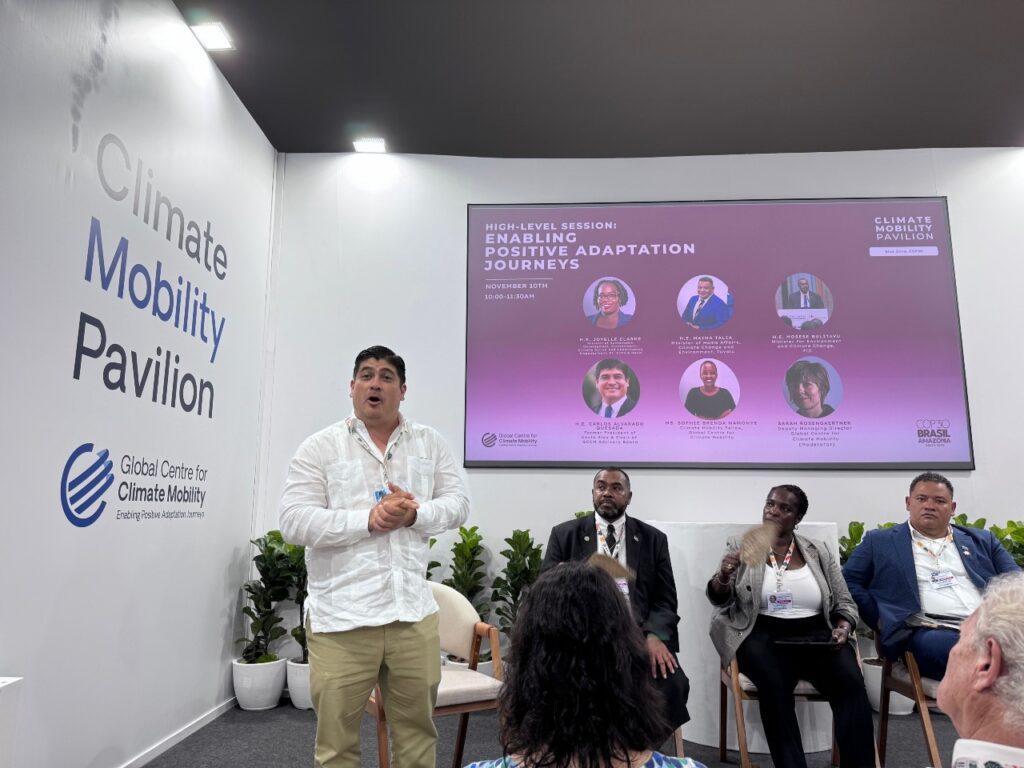
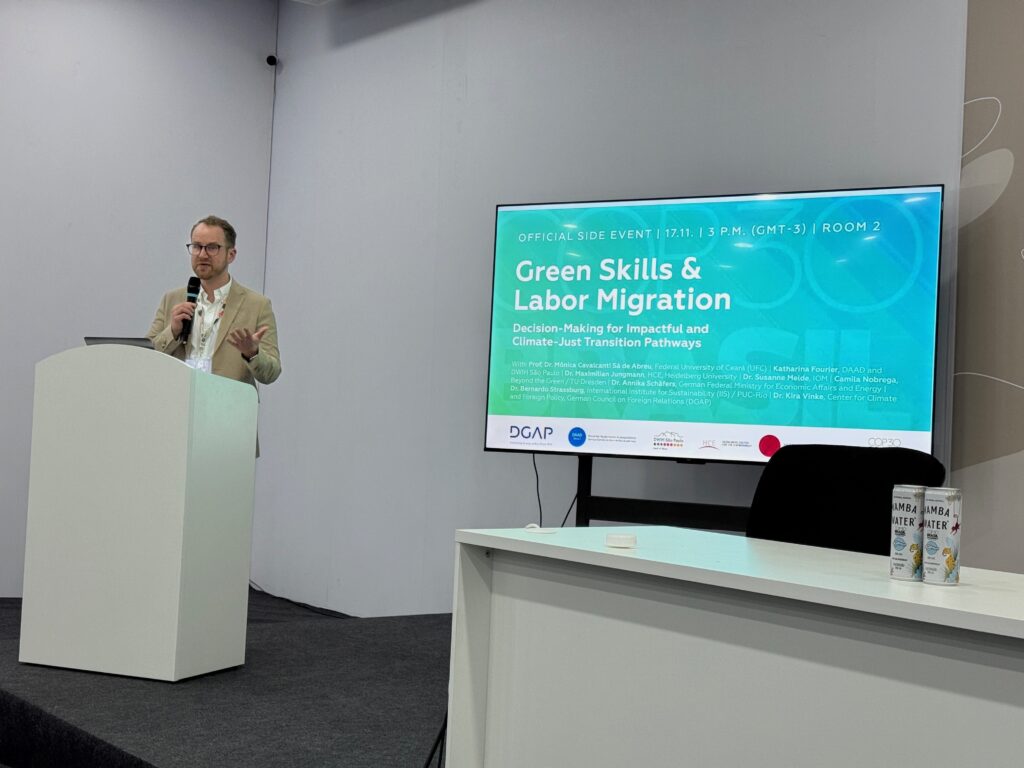
Climate finance was a key topic of discussion at COP30, and an agreement was reached on tripling the amount of adaptation finance to be made available to developing countries. An increasing number of countries are currently establishing climate finance units to more strategically seek funding for their National Adaptation Plans (NAPs). The African Union has also recently established a climate finance unit. Alan met with Ethiopia’s Senior Climate Finance Advisor, to discuss Ethiopia’s climate finance strategy and explore opportunities for collaboration to support Ethiopia in ensuring its finance strategy incorporated displacement, mobility, and green skills. Many conference participants expressed the belief that a stronger focus on integrating mobility into climate finance strategies at national and regional levels would emerge in the very near future. This has already started to happen with the support of the International Organisation for Migration (IOM), who have launched the Climate Mobility for National Adaptation Plans Initiative. In addition to supporting countries to integrate mobility into their NAPs, the IOM has also launched a number of initiatives in the past year, including Climate Mobility Innovation Labs, a Risk Index for Climate Displacement, and the Climate Catalytic Fund to provide quick access to funding following climate shocks.
Despite limited progress at COP30, it is clear that the issue of displacement and mobility is becoming increasingly important for countries affected by climate change, and will only continue to rise up the political agenda as the impacts of climate change are felt.